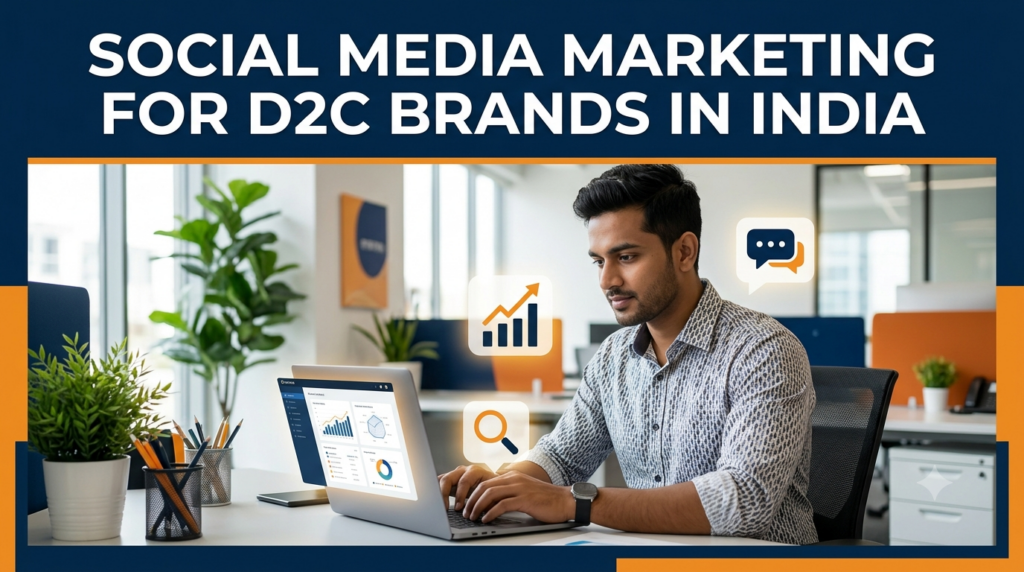
Social Media Marketing for D2C Brands in India: 7 Winning Tactics
Social media marketing for D2C brands in India It doesn’t work the same way that it does for a retail chain or a B2B company. A direct-to-consumer (D2C) brand will thrive or perish based on its ability to sell itself within the scroll – there’s no showroom, no distributor – just a feed and a checkout link. This guide sets out exactly how social media marketing for D2C brands in India operates today – which platforms really matter, what content will convert, how to set up paid ads that pay back themselves and how to establish whether anything is working at all. Why Social Media Marketing for D2C Brands in India Works Differently The d2c brand doesn’t have a store where a customer can actually walk in. social media itself acts as your storefront, salesperson and customer service desk – all in one place most of the time. that really changes your priorities. a major retailer might be using social media mainly for building their brand image but an effective social media campaign for d2c brands in india has to perform two jobs simultaneously – build your trust and make you buy something – and do it generally within that one scroll session itself. Choosing the Right Platforms for D2C Brands Instagram: still the default starting point For most D2C categories – beauty, fashion, food and home goods – Instagram still remains the main channel. Reels, stories and a really well set out shop tab all work together to nudge a browser towards becoming a buyer. YouTube Shorts and long-form: underused by most D2C brands Many direct-to-consumer brands regard YouTube as an afterthought – which is quite a lost chance. Product demos, founder stories and ‘how it’s made’ content work really well here and tend to stay relevant for much longer than just one Reel. Where Facebook and Pinterest still fit Facebook still holds relevance for retargeting and for reaching an older, frequently higher-spending demographic that many D2C categories (such as home, wellness, and baby products) really rely on. Pinterest works very well for visually driven categories such as fashion, decor, and beauty – even though it’s a slower-burning channel compared to Instagram. Figuring out the right mix of platforms is essentially the very first decision in social media marketing for D2C brands in India – having a small team spread across five platforms generally results in doing each one quite poorly. Regional language content: an underutilized lever A significant portion of India’s social media audience interacts much more naturally in Hindi or a regional language than in English itself. Brands that carry out social media marketing for D2C brands in India entirely in English are limiting their reach to a smaller, more competitive fraction of the audience. Even just some regional language content – a few Reels or captions every month in the language your actual audience speaks – really does tend to see stronger engagement than English-only content directed towards the exact same city or region. Content Strategy for Social Media Marketing for D2C Brands in India User-generated content builds trust faster than brand content Customers will trust one another more than they’ll trust a brand’s advertising material itself. Re-posting actual reviews, unboxing videos and customer photographs does far more for conversion than another highly produced product shot. Founder-led and behind-the-scenes content D2C buyers in India increasingly want to know who’s behind the brand. A founder talking directly to camera — about the product, the sourcing, the story — tends to outperform generic brand messaging, especially for newer or smaller brands still building trust. Festival and seasonal content calendars Timing matters more in India than in many other markets. A campaign built around Diwali, Rakhi, or wedding season connects differently than the same message run in a random month — plan content calendars around these moments rather than treating them as an afterthought. Paid Social Media Marketing for D2C Brands in India: The Meta Ads Playbook Organic reach alone rarely scales a D2C brand past a certain point. This is where paid social media marketing for D2C brands in India becomes necessary, not optional. Prospecting vs. retargeting campaigns Prospecting adverts make your product known to individuals who have never even heard of you – and these will have to be more inventive since there is no existing trust to rely upon. Retargeting adverts are directed towards those who have actually visited your website or shown interest in your content and usually convert at a much lower cost. All need to run side by side. Running prospecting without retargeting leaves money uncollected; running retargeting without prospecting will eventually exhaust the pool of potential customers to target. Budget split between the two A common starting point for social media marketing for D2C brands in India is to weight spend more heavily toward retargeting early on, since it converts at a lower cost, then shift more budget toward prospecting once retargeting audiences start to shrink from repeated exposure. There’s no fixed ratio that works for every brand — the right split depends on how much traffic your organic content and existing customer base already generate. Creative that stops the scroll Meta Ads reward creative that doesn’t look like an ad — native-feeling video, real customers, real usage. Studio-perfect product shots alone tend to underperform against something that looks like it belongs in a friend’s feed. Measuring ROI of Social Media Marketing for D2C Brands in India The metrics that actually matter Follower count and likes are the easiest numbers to track and the least useful ones for a D2C business. What matters is cost per acquisition, return on ad spend, and repeat purchase rate — the numbers that connect directly to revenue. Setting up tracking before you scale spend Before increasing ad budgets, make sure conversion tracking (through Meta Business Suite and your website analytics) is actually accurate. Scaling spend on top of broken tracking just scales the guesswork along with it. Common Mistakes in D2C Social Media Marketing Posting